📰 What’s Going On
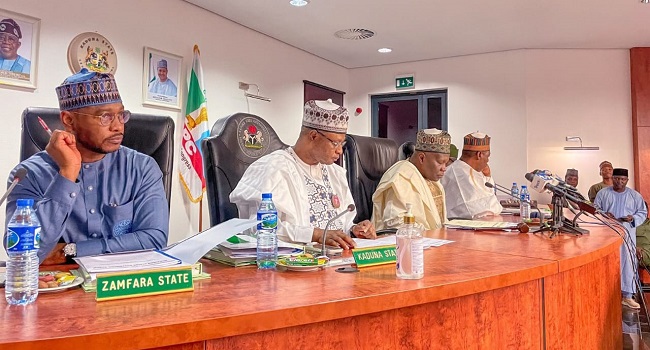
Leaders from the northern region of Nigeria, under the umbrella of the Northern States Governors’ Forum (NSGF) and allied with the Northern Traditional Rulers’ Council, have called for a six-month suspension of all mining activities across the North. The move is presented as a response to rising insecurity, especially linked to illegal mining operations which, they argue, have fueled violence, banditry, and kidnappings across several states.
At the same time, the governors unveiled plans to establish a regional Security Trust Fund, to be contributed to by all 19 northern states and their local governments — amounting to roughly ₦228 billion per year (₦1 billion per month per state/local-govt). The fund is aimed at financing joint security operations, intelligence-led interventions and broader coordinated responses to insecurity.
🔍 Why They’re Doing This
According to the communique from their Kaduna meeting:
- Illegal mining and unregulated mineral exploitation have become intertwined with criminal networks — providing funds, weapons, or leverage to insurgents, bandits, or kidnappers. The governors argue that this link between illicit mining and insecurity must be broken.
- The six-month suspension would allow for a full audit and revalidation of existing mining licences, under supervision of both federal and state authorities, to weed out illicit operations and restore oversight.
- The new Security Trust Fund is meant to provide sustained, reliable financing for security — not depending solely on federal institutions but empowering state-level coordination and action. Given the scale of security challenges, the governors view the fund as essential for more agile, responsive local security infrastructure.
- The move also comes with renewed support for decentralised policing — the governors and traditional rulers restated their backing for creation of state-level police forces, arguing that the current centralized policing structure is insufficient for the scale and complexity of Northern Nigeria’s security challenges.
📌 What the Plan Entails
- Mining Ban: Total suspension of mining exploration and artisanal mining for six months. All mining licences to be audited and revalidated.
- Security Trust Fund: Monthly contributions from each state–local government unit; deducted at source; funds dedicated solely to security operations, possibly including intelligence, joint operations, community protection, emergency response, etc.
- State Police Push: Strong endorsement for state police system. Northern leaders urge lawmakers (federal and state) to fast-track the constitutional changes needed.
- Coordinated Response: A unified regional approach combining state, traditional leadership, and — where needed — federal support to tackle insurgency, banditry, kidnapping, and other forms of violence.
⚠️ What’s at Stake, and What Challenges Lie Ahead
- Economic Impact: A six-month halt in mining could severely affect livelihoods — especially in communities dependent on artisanal or small-scale mining. Many miners and their families may lose income; local economies may slump unless mitigation or alternative livelihood plans are offered.
- Resistance and Compliance: Enforcing a broad mining ban across a vast geographic region may face pushback — from miners, business interests, and possibly criminal networks who may resist license revalidation or try to circumvent the ban.
- Trust Fund Management: Mobilising ₦228 billion is ambitious — but the success of the fund will depend on transparent, accountable management. Mismanagement risks waste, corruption, or failure to deliver on security aims.
- Policing Reform Hurdles: Introducing state police requires constitutional amendment (or legal reform), political will, and careful structuring. It’s not a quick fix — and could face legal, logistical, or political challenges.
- Long-Term Security vs Short-Term Shock: While the measures aim to curb financing for criminal groups and strengthen security, a six-month disruption to mining may aggravate poverty and instability if alternative economic or social safety measures are not put in place.
✅ What to Watch Going Forward
- Whether the federal government and the relevant ministries accept and implement the mining suspension and licence audit — and how strictly the ban is enforced.
- The structure, oversight and rollout plan for the Security Trust Fund — including transparency mechanisms, deployment of funds, and coordination among states, local governments, security agencies, and community leaders.
- Developments toward state policing: whether lawmakers respond with constitutional or legislative moves; how local security forces are planned; and how they will operate alongside or in place of existing national security forces.
- The near- and mid-term impact on illegal mining, banditry financing, kidnappings, and general security outcomes in the North — and whether communities see real improvement.
- The socio-economic consequences for mining communities: whether states plan safety nets, alternative livelihoods, or support programs to cushion the economic shock.
The northern governors’ sweeping proposal signals urgency and a willingness to explore bold reforms in a part of Nigeria suffering prolonged insecurity. Whether it leads to lasting stability or unintended hardship will depend — heavily — on how the ban is implemented, how the fund is managed, and how communities are supported through the transition.
